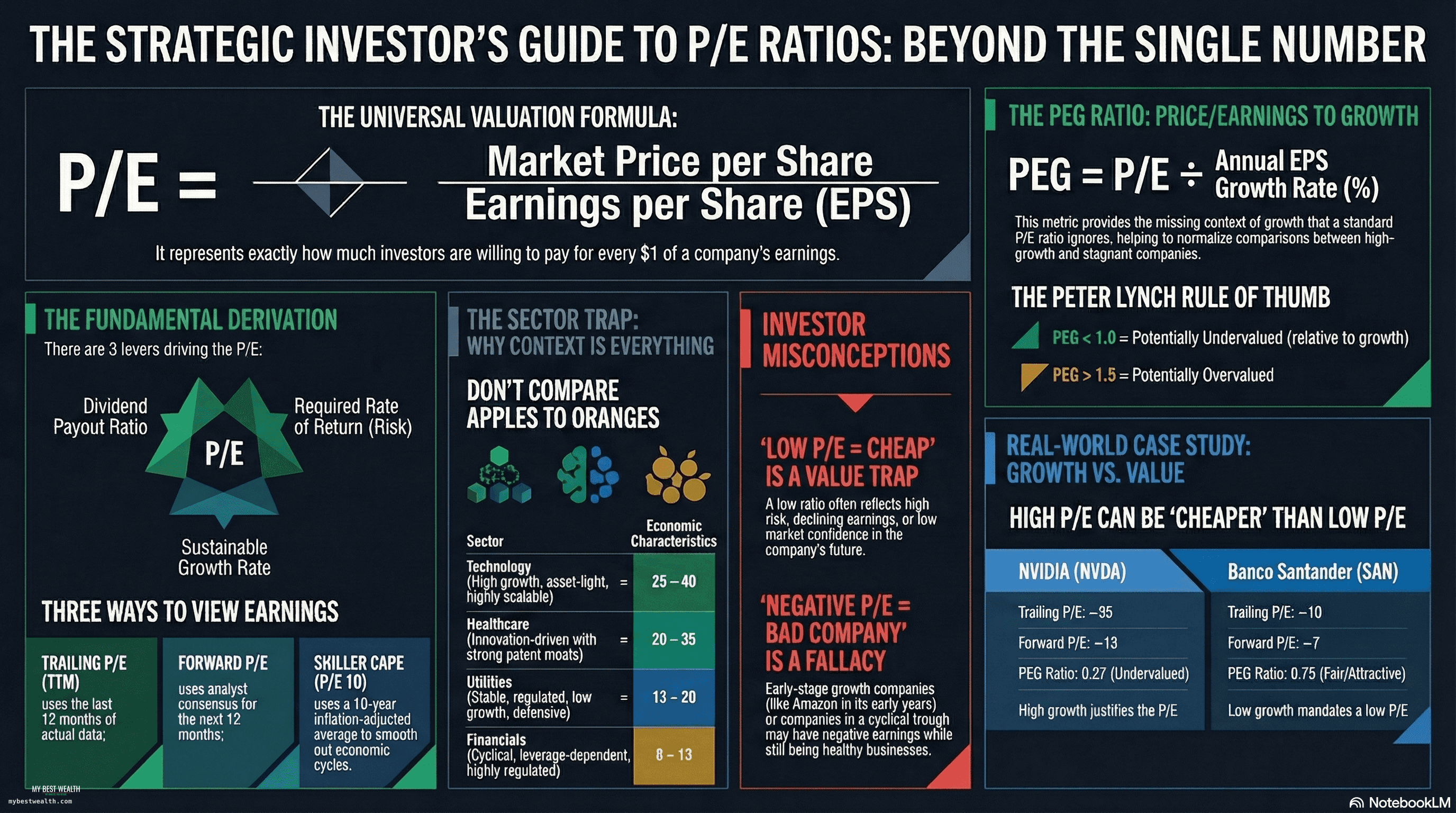
P/E Ratio Explained: What It Is, How to Use It & 3 Costly Myths
Related articles
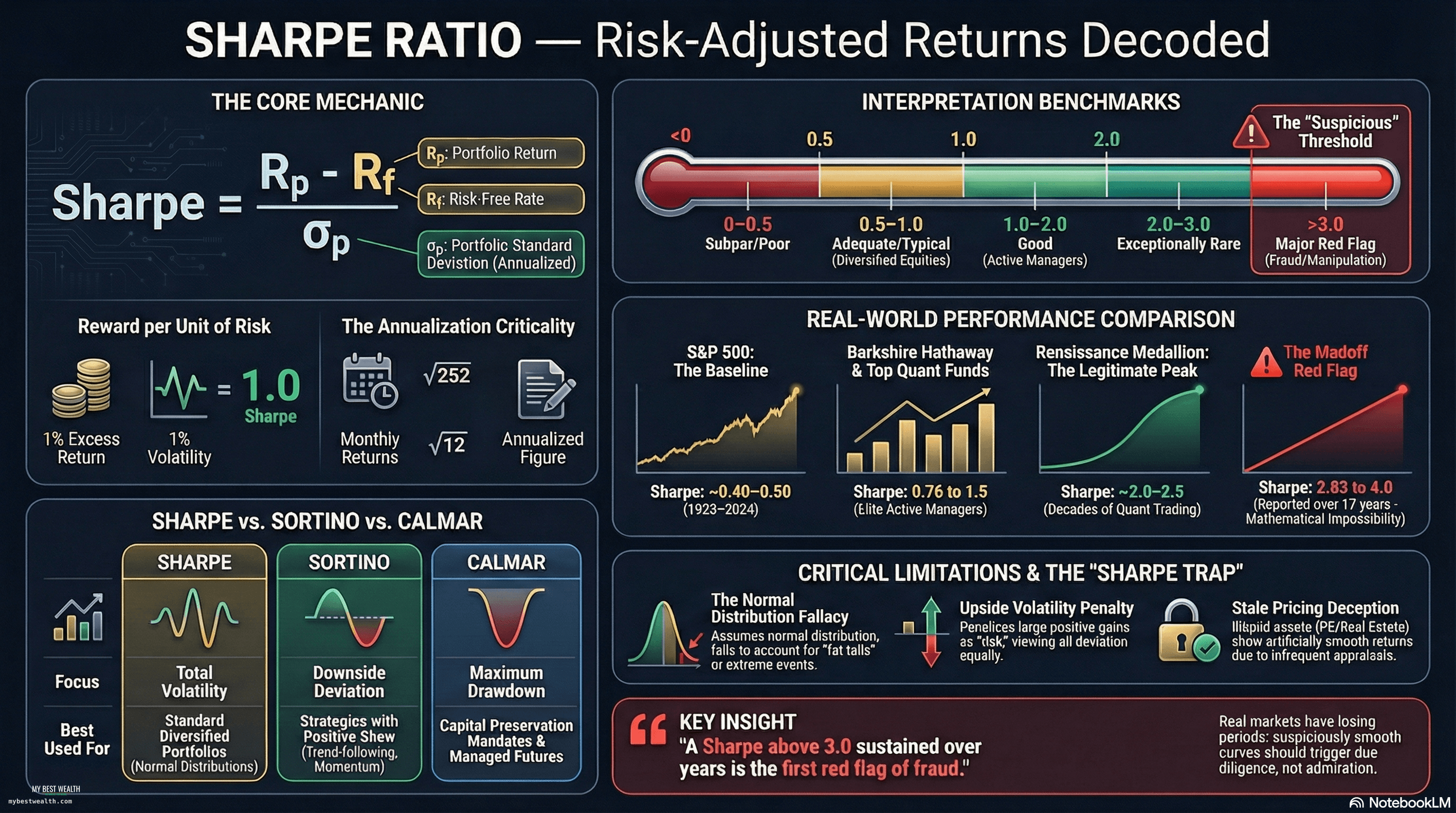
Sharpe Ratio Explained: Formula, Benchmarks & Why a Sharpe > 3 Signals Fraud
The Sharpe ratio measures risk-adjusted returns. Learn how Madoff's impossible Sharpe was the first red flag, why the S&P 500 rarely exceeds 0.5, and calculate yours.
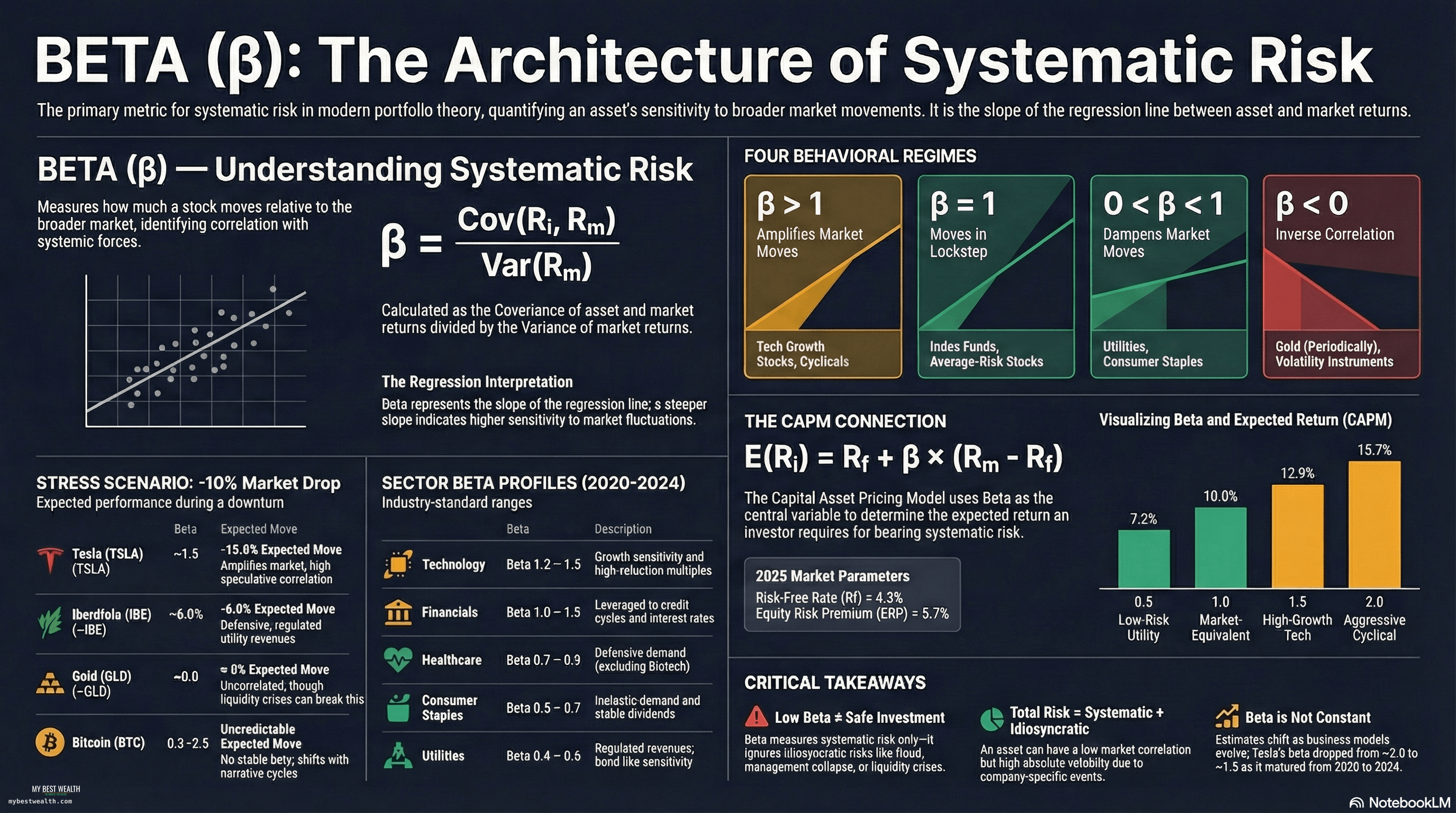
Stock Beta Explained: CAPM Formula & Why Low Beta Doesn't Mean Safe
Beta measures how much your stock moves with the market. Learn why low beta doesn't mean safe, with Tesla, Iberdrola, and Bitcoin as real-world cases.
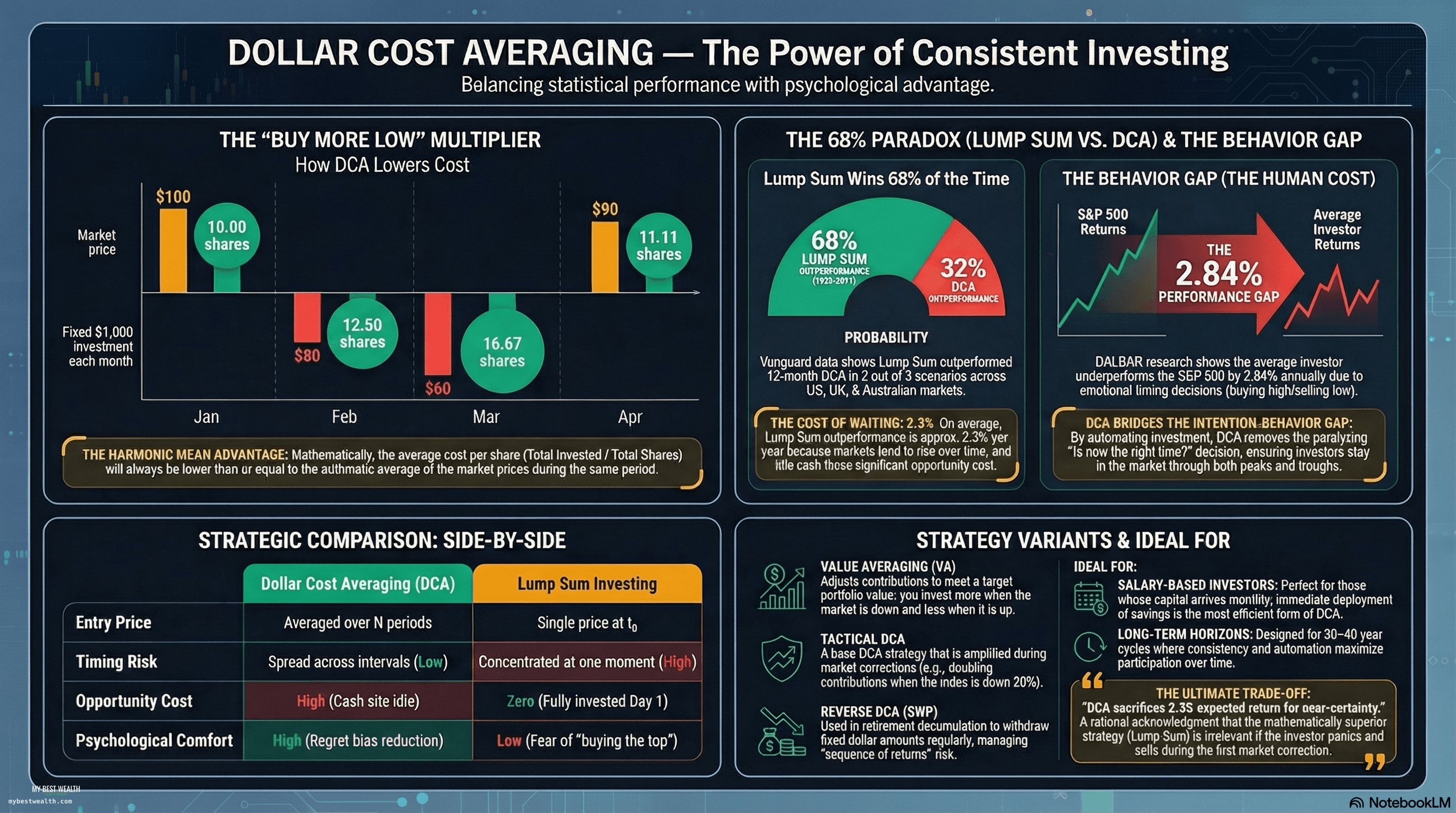
DCA Explained: What Dollar Cost Averaging Is, When It Works & When It Doesn't
DCA works — but lump sum beats it 68% of the time. Discover the paradox with Vanguard data, S&P 500 case study, and an interactive calculator.

P/E Ratio Explained: What Most Investors Get Wrong
The P/E ratio is the most widely used metric in finance — and the most misunderstood. Learn how to use it properly, when it lies, and why comparing P/E across sectors is a classic mistake.
This article is for educational and informational purposes only. It does not constitute financial advice or personalized investment recommendations. Investing involves risks.